
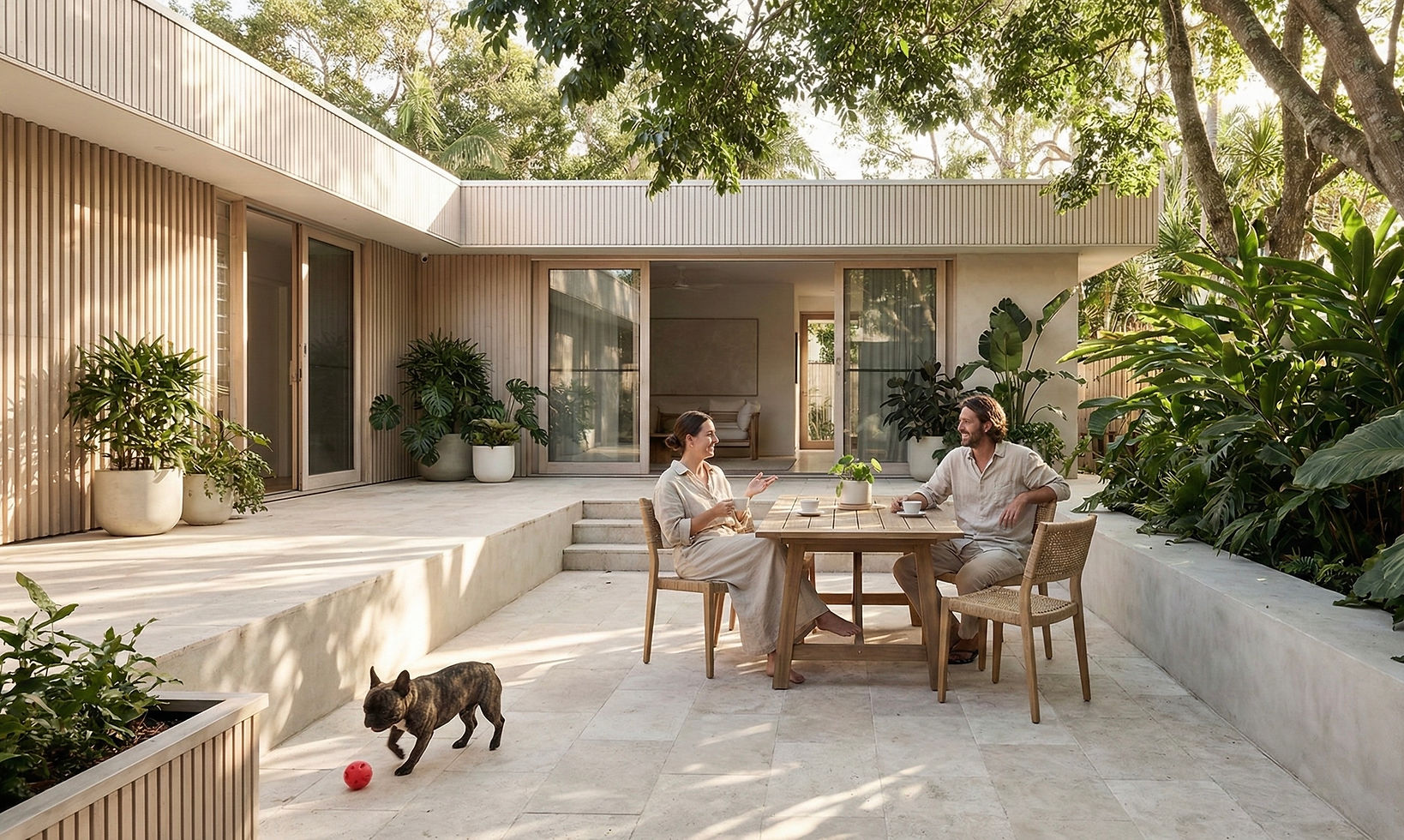
How New Real Estate Concepts Are Shaping a Better Built World
- Geoff Wilkinson
- Nov 30, 2025
- 2 min read

Updated: Dec 31, 2025
The property world is changing. Not because of trends, but because people want homes and small buildings that feel good, work well, and hold their value over time. The old model—generic plans, surface upgrades, and unclear decisions—is fading. A design-led approach is taking its place.
At Altira, we believe every space should support life with clarity, flexibility, and emotional quality. Here’s how the next generation of ideas is reshaping that future—and how you can use them.
What Today’s Real Estate Shift Is Really About
This shift is not about architectural style.
It’s about how a space supports daily life.
Core ideas include:
Adaptability — layouts that change as life does
Sustainability — natural light, airflow, and smart energy use
Technology — systems that make living easier
Community — thoughtful spaces that bring people together
Design quality — not luxury, but clarity, proportion, and feeling
The direction is clear: Good design creates long-term value - emotionally and financially.
How to Apply These Ideas to Your Own Project
The strongest projects begin with smart early decisions. Here’s the Altira way:
1. Start with feeling
Think about how you want a space to feel—calm, open, connected. Feeling guides function.
2. Use layouts that support change
Multi-use rooms, dual-key options, and outdoor rooms let spaces work harder without extra cost.
3. Let nature lead
Courtyards, terraces, planting, and natural ventilation improve comfort, wellbeing, and value.
4. Choose materials that age well
Quality doesn’t mean expensive—it means materials that support the mood of the space over time.
5. Integrate technology from the start
Smart lighting, shading, and energy systems work best when planned early.
These choices help a property adapt, endure, and outperform.
Key Forces Shaping the Future of Development
If you want to build or invest with clarity, these are the forces to understand:
1. Design-led sustainability
Homes that breathe—light-filled, ventilated, connected to nature—are becoming the new baseline.
2. Low-rise, mixed-use living
Small mixed-use buildings, corner sites, and dual-key layouts allow a single property to support multiple uses and income streams.
3. Flexible spaces
Work-from-home, intergenerational living, and rental flexibility all depend on adaptable design.
4. Community-centred design
Walkability, shared green spaces, and thoughtful outdoor rooms increase desirability and long-term value.
5. Wellness through design
Light, air, greenery, and texture are now core parts of a high-quality home.
These are not trends—they represent a deeper shift in how people want to live.
Design and Investment Are Now the Same Conversation
Great design isn’t a cost line—it’s a multiplier.
A well-considered property:
stays desirable longer
attracts better tenants or buyers
reduces long-term maintenance
adapts without major renovations
builds emotional and financial value over time
To align design and investment:
Start with a clear vision
Prioritize design early
Focus on flow, light, and proportion
Bake in flexibility
Track long-term costs, not just build costs
Stay informed and intentional
Design is the bridge between how a space feels and how it performs.
Build for Life. Build for Return. Build with Clarity.
The future of property rewards people who design with purpose and think ahead.
If you want a smarter starting point—one that simplifies choices and shows the full journey—your next step is clear:
→ Explore the Altira Roadmap
Your first step toward building a space with beauty, clarity, and long-term value.


